


imo live
3.6750.00 Reviews
App Specs
- Version
- Varies with Device
- Updated On
- License
- Free
- Downloads
- 1,000,000+
- Developer
- Baby Penguin
- Categories
- Social
- Platform
- Android, iOS
Screenshots
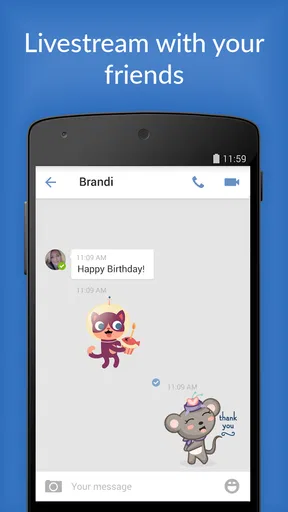
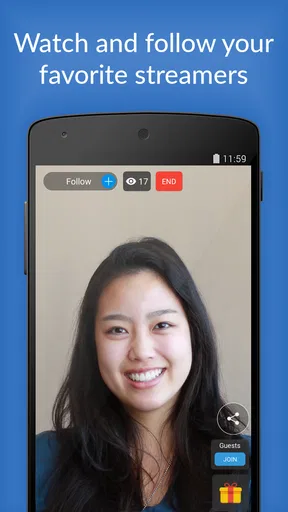
 Analysis by AppCompare
I approached imo live as a social app for people who want to present themselves, meet others, and spend time in a more public, personality-driven environment. The first impression is simple: it is free to download, aimed at a Teen audience, and built around the idea of being yourself rather than managing a formal profile or a carefully edited professional identity. That makes it appealing when you want casual interaction, but it also means trust and personal boundaries matter more than they do in a basic messaging tool.
In my experience, the app makes the most sense for users who enjoy discovering personalities through live social activity instead of relying only on private chats. It can be a place to browse, participate, and decide which interactions deserve more attention. I would not treat it as a replacement for a private messenger, however. Its social character creates opportunities for connection, but it also requires more active judgment about what I share, who I respond to, and how quickly I move a conversation forward.
How imo live feels in everyday use
The app comes from Baby Penguin and sits in the social category. It has been available since December 19, 2019, and its reach is substantial, with over one million installs. That scale tells me there is a real audience for this style of interaction, although the average score of 3.6 from around 3,200 ratings suggests that the experience is not equally satisfying for everyone. I read that combination as a useful warning: imo live is worth exploring, but I would not install it expecting a flawless or universally comfortable community.
A realistic use case would be an evening when I want lightweight social contact without arranging a call with someone I already know. I might open the app, look around, watch a live interaction, and decide whether I want to participate or simply leave. That flexibility is one of its better qualities. I do not have to turn every visit into a long conversation. For someone who feels more comfortable observing first, that gradual approach can make the app less intimidating than jumping straight into a private chat.
The trade-off is that open-ended social discovery can feel less predictable than a normal contact list. In a conventional messenger, I generally know who is on the other end because I started with a phone number, username, or existing relationship. Here, the reason to return is discovery itself, so the quality of an interaction depends heavily on the people I encounter and on how well I use the available choices around participation and contact.
Who is likely to enjoy it
I think imo live is best suited to adults and mature teens who understand that online social spaces require boundaries. The Teen content rating is important here. It does not mean I should assume every interaction will feel suitable for every younger user; it means the app belongs in a category where personal judgment, supervision when appropriate, and careful sharing are sensible parts of the experience.
It may work well for someone who likes live social formats, casual introductions, and the possibility of finding conversations outside an existing friend group. It is also useful for people who prefer to decide their level of involvement moment by moment. I can browse without committing, participate briefly, or return to a familiar interaction if I find one that feels comfortable.
Worth Reading Before You Choose

EA SPORTS FC Mobile 26 Is a Bigger Football Game, but It Takes Time

Flipboard Shows What News Apps Must Do Beyond the Feed

Switching to Android Auto Means Rethinking Your Driving Routine

Google Calendar Makes a Crowded Week Easier to Manage

Ludo King Makes the Most of the Minutes Between Plans

Baby Panda World Brings Quick Play to Modern Phones, but Its Game Library Feels Busy
I would be more cautious about recommending it to someone who dislikes public-facing social discovery, becomes uncomfortable with unsolicited attention, or wants a strictly private communication tool. If the main goal is reliable messaging with family, work contacts, or a small group of close friends, a conventional messenger is usually the cleaner choice. Those apps are designed around known contacts, while imo live is more dependent on navigating an open social setting.
Trust starts with what I choose to reveal
My trust in an app like this does not come from its short slogan or its download count. It comes from how clearly I can understand the choices in front of me and how disciplined I am about using them. With a social app built around self-expression, I would avoid treating a profile or live appearance as a private room. Anything I say, show, or repeat can shape how other people perceive me, even when the original interaction feels casual.
Before becoming active, I would use a low-risk profile approach. That means avoiding a full name, workplace details, school information, precise location, daily routine, or anything that could connect the account to my offline identity. I would also think carefully before using the same username or profile image that I use on other platforms. This is a practical way to reduce unwanted cross-platform discovery without needing to abandon the social experience altogether.
A useful habit is to separate experimentation from commitment. On the first visits, I would observe how conversations work, how people respond to boundaries, and whether I can easily stop an interaction. Only after that would I decide whether to add more personal context. The safest social workflow is to start with less information and increase it only when trust has been earned.
I would also avoid moving quickly from an in-app interaction to another service. A request to continue elsewhere is not automatically suspicious, but it removes some of the context and controls of the original platform. Keeping early conversations inside the app gives me more time to judge tone, consistency, and respect for boundaries before making the relationship more personal.
Controls matter more than a friendly first impression
When I evaluate imo live, I pay attention to the controls that shape participation: whether I can decide who receives my attention, whether I can end an interaction cleanly, and whether I can manage unwanted contact without negotiation. These are more meaningful to me than a polished interface. A social platform earns confidence when it lets the user leave, mute, block, or report without making that person feel responsible for protecting the other party’s feelings.
I would explore the account and privacy areas before spending much time in the community. I would look for settings related to visibility, notifications, messages, profile presentation, and contact permissions, then choose the least exposed option that still lets me use the features I want. I would not assume that a default setting matches my preferences. Defaults are designed for broad usability, while my own comfort level may require a more restrictive setup.
Another practical step is to review notifications. Frequent alerts can make a social app feel urgent, encouraging me to respond before I have decided whether I actually want the conversation. Reducing nonessential notifications gives me back control over when I engage. It also makes the app easier to keep in its proper place instead of allowing it to interrupt work, sleep, or time with people nearby.
If an interaction becomes uncomfortable, I would not try to win an argument or explain my entire decision. I would end the exchange, use the relevant account controls, and keep a record of what happened if a report is necessary. The ability to disengage quickly is especially important for a Teen-rated social environment, where users may still be learning how to handle persistence, pressure, and manipulative behavior online.
Data-sensitive moments deserve extra care
The most sensitive moments are not limited to account creation. They can happen while setting up a profile, joining a live interaction, responding to a direct message, or deciding whether to share an image or voice recording. Each action can reveal more than I intended. A background may disclose a neighborhood, a uniform may identify a school or employer, and a casual comment may reveal a routine or relationship.
I would therefore review every photo and live appearance as if it were a small piece of personal information rather than just decoration. Before posting, I would check the background, visible documents, street signs, screens, and reflections. This is not about being paranoid; it is about recognizing that visual details can identify me even when I never type my name.
I would be particularly careful with requests for money, gifts, account access, verification codes, or private images. The presence of in-app purchases, which range from $0.99 to $199.99 per item, is another reason to keep spending decisions deliberate. I would not treat a purchase prompt as part of a social obligation, and I would never pay simply because another user creates urgency or promises attention in return.
For a younger user, I would recommend discussing purchases and interactions with a parent or guardian before using the app regularly. The Teen rating makes that conversation reasonable, especially if the device has a saved payment method. A good rule is to separate social approval from financial decisions: no compliment, invitation, or request should determine whether I spend money.
I would also watch for emotional data. Social apps can reveal mood, loneliness, interests, and availability through repeated behavior even when I never state those things directly. If I notice myself returning mainly because I feel pressured to respond, I would take a break and reassess whether the app is serving me. That pause is a useful privacy and wellbeing control in its own right.
Keeping control over the experience
One of the strongest ways to use imo live well is to define a purpose before opening it. If I want a short break, I can browse for a limited period. If I want to meet people, I can focus on respectful conversation rather than trying to collect as many contacts as possible. If I am tired or upset, I may choose not to participate at all. The app cannot make that decision for me, so the quality of my experience depends on the boundaries I set before the social momentum begins.
I would create a simple personal rule for new contacts: no private details, no financial requests, no rushed move to another platform, and no continued conversation after a clear boundary has been ignored. This rule is easy to remember and helps me judge behavior instead of making excuses for it. A person who respects a small boundary early is more trustworthy than someone who is merely charming.
Another useful approach is to keep my profile consistent with the level of privacy I want. If I present myself as highly available, share too much personal context, or respond instantly at all hours, I may attract expectations that are difficult to manage later. A quieter profile and selective participation give me room to change my mind without creating unnecessary friction.
I would also check my spending habits separately from my social habits. Because the app is free to download but includes optional purchases, I would disable or protect one-tap buying where possible and review any transaction before confirming it. Free access can make an app feel costless, yet optional items can still add up when they are connected to attention, status, or social pressure. Treating purchases as a separate decision keeps the social side from controlling the financial side.
Where it differs from ordinary social and messaging apps
Compared with a standard messenger, imo live is more discovery-oriented and less dependent on people I already know. That can make it more spontaneous, but it also creates more uncertainty. A messenger is usually strongest when I need dependable private communication. This app is more interesting when I want to explore social interaction and choose whether a new connection deserves further attention.
Compared with a traditional social network, the appeal here is the immediacy of live interaction and the feeling of being present with other people rather than simply scrolling through finished posts. The downside is that live settings can reduce the time I have to think before reacting. If I prefer carefully edited content, long-form discussion, or a highly organized feed, another social platform may feel calmer and easier to manage.
Compared with video-focused live services, imo live feels more personal when the goal is conversation rather than passive viewing. That can be a strength for someone who wants participation, but it also means I need to pay closer attention to boundaries and unwanted contact. The more direct the interaction, the more important it becomes to know how I will disengage before I begin.
These comparisons lead to a practical conclusion: I would use imo live as a supplementary social space, not as my only communication channel. Keeping close relationships on a private service and using this app for selective discovery creates a healthier separation between trusted contacts and unfamiliar interactions.
What the rating and cost suggest
The app’s 3.6 average from roughly 3,200 ratings gives me a mixed but understandable picture. It is not a sign that the app is unusable, nor is it strong evidence that every user will enjoy it. Social products are especially dependent on community fit, personal expectations, device behavior, and tolerance for unsolicited interaction. A person who enjoys live discovery may judge it more kindly than someone looking for a quiet, private messenger.
The free entry point makes trying it relatively straightforward, but I would still approach the purchase system carefully. Optional items priced from $0.99 to $199.99 per item create a wide range of possible spending, so I would decide in advance whether I am willing to buy anything at all. If the answer is no, I can still evaluate the app based on its social experience rather than allowing paid options to influence my opinion.
I would also give the app a short trial period rather than making an immediate commitment. During that time, I would check whether the conversations feel respectful, whether the controls are easy to find, and whether notifications or purchase prompts interfere with how I want to use it. This trial should be about fit, not about forcing myself to like a service simply because it has a large audience.
My cautious verdict
After considering how I would use it, I see imo live as a reasonable option for people who want casual, live social discovery and are comfortable managing their own exposure. Its free access and broad audience lower the barrier to experimentation, while the Teen rating makes it clear that users should approach the social environment with maturity and care. I like the possibility of observing first, participating selectively, and deciding which interactions deserve more time.
My reservations are equally clear. This is not the app I would choose for private family communication, sensitive conversations, or users who want predictable contact with known people. The open social format can bring enjoyable spontaneity, but it can also bring unwanted attention, pressure, or ambiguity. The purchase range means I would keep financial controls separate from social decisions, and I would review privacy and notification choices before becoming active.
My recommendation is to install it only with a plan: use a restrained profile, reveal personal information slowly, learn the account controls, limit notifications, and leave any interaction that ignores a boundary. If that sounds like a reasonable way to use a social app, imo live may be worth trying. If you want a quiet, private, tightly controlled communication tool, I would choose a conventional messenger instead. For me, the app is most worthwhile when curiosity is balanced by deliberate control, not when it becomes a substitute for judgment.
Pros
- Free voice and video calls with clear audio on stable connections.
- Low data usage makes it practical for mobile networks and limited plans.
- Group chats support convenient communication with friends
- family
- or teams.
- Simple interface is easy for first-time users to understand.
- Supports photo
- video
- and file sharing directly inside conversations.
Cons
- Requires both users to install imo for calling features.
- Advertising can interrupt the experience in the free version.
- Privacy controls may feel limited compared with more advanced messengers.
- Call quality can drop noticeably on weak or unstable networks.
- Some features and content may vary depending on your country or region.
FAQs for imo live
What is imo live, and what can I use it for?
imo live is a communication app that lets users make voice and video calls, send instant messages, share photos and videos, and participate in live or social interactions, depending on the features available in their region. It is designed for staying in touch with friends, family, and other users through an internet connection rather than traditional mobile calling.
Is imo live free to download and use?
The app is generally free to download and offers core messaging and calling features without requiring a subscription. However, internet data charges may apply when using mobile data, and some live, social, virtual-gift, or promotional features may involve in-app purchases. Before spending money, users should carefully review the displayed prices, payment terms, and refund policies on their device’s app store.
Does imo live require an account or phone number?
imo live normally requires users to register with a phone number or another supported sign-in method so the service can create and verify an account. Depending on the version and location, permission may be requested to access contacts, the microphone, camera, notifications, or storage. You can review and change many of these permissions in your Android or iOS settings.
Is imo live safe and private to use?
imo live includes common safety tools such as blocking or reporting users, but no social communication platform can eliminate every risk. Avoid sharing passwords, financial details, personal documents, or precise location information with strangers. Check who can contact you, review profile visibility and permission settings, and be cautious with unfamiliar links, requests for money, or unsolicited live invitations.
Can I use imo live on Android and iPhone, and what does it need?
imo live is available for supported Android and iOS devices, although the exact compatibility requirements can change with app updates. A stable Wi-Fi or mobile-data connection is recommended for clear calls and live content. You should also allow microphone and camera access when needed, keep sufficient storage available, and install updates from the official Google Play Store or Apple App Store.


